
The Ultimate Guide to Scrap and Metal Recycling: How Metals Recycling Ltd Powers Sustainability & Profitability
Introduction: The Modern Alchemy of Metal Recycling
In Scrap and Metal an era defined by environmental consciousness and resource scarcity, a quiet revolution is transforming global industry. Every day, millions of tons of discarded metal find new life through an intricate process that combines ancient principles with cutting-edge technology. This isn’t just waste management—it’s a sophisticated, multi-billion dollar industry that forms the backbone of sustainable manufacturing and circular economies worldwide.
At Metal Recycling Ltd, we stand at the forefront of this transformation. What began as a local collection service has evolved into a comprehensive recycling ecosystem that bridges the gap between waste and resource, between environmental responsibility and economic opportunity. This 4,000-word guide will take you deep into the world of scrap metal, exploring its history, science, economics, and environmental impact, while revealing how Metals Recycling Ltd has become a leader in this vital industry.
Chapter 1: Understanding the Scrap and Metal Universe
The Fundamental Distinction: Ferrous vs. Non-Ferrous Metals
The scrap metal world divides into two primary kingdoms, each with distinct properties, values, and recycling processes.
Ferrous Metals: The Backbone of Industry
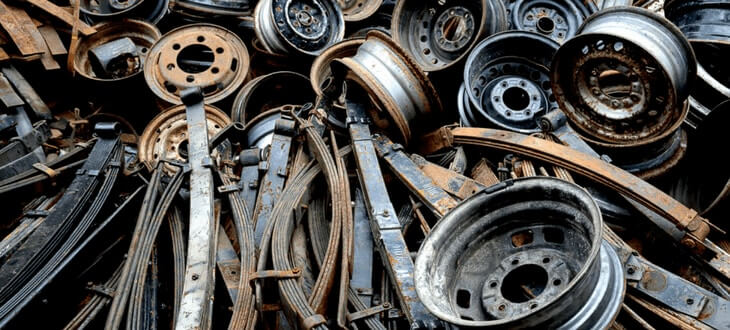
Ferrous Scrap and Metal contain iron as their primary component. Their defining characteristic is magnetism, and they generally offer exceptional strength at relatively low cost. Scrap and Metal
- Steel: The most recycled material on Earth. Annually, approximately 650 million metric tons of steel scrap are recycled worldwide—enough to build 650 Eiffel Towers every year.
- Cast Iron: Known for its excellent compressive strength and wear resistance.
- Wrought Iron: Historically significant but less common in modern recycling streams.
The global steel industry relies on scrap for approximately 30% of its raw material needs. Every ton of steel recycled saves 1.5 tons of iron ore, 0.5 tons of coal, and 40% of the water required in primary production.
Non-Ferrous Metals: The Premium Players
These Scrap and Metal contain no significant iron content and are generally more corrosion-resistant and malleable than their ferrous counterparts.
- Aluminum: Recycling aluminum requires only 5% of the energy needed for primary production. The aluminum can you recycle today could be back on a shelf in as little as 60 days.
- Copper: One of the most valuable scrap metals, with recycling rates exceeding 60% in developed nations.
- Brass & Bronze: Copper alloys with diverse applications and excellent recyclability.
- Stainless Steel: Despite containing iron, its chromium content (minimum 10.5%) places it in a special category with premium recycling value.
The Hierarchy of Scrap: Understanding Grades and Values
Not all scrap is created equal. At Metal Recycling Ltd, we categorize materials into precise grades that determine their processing requirements and market value.
Industrial Scrap (Prime or Prompt Scrap)
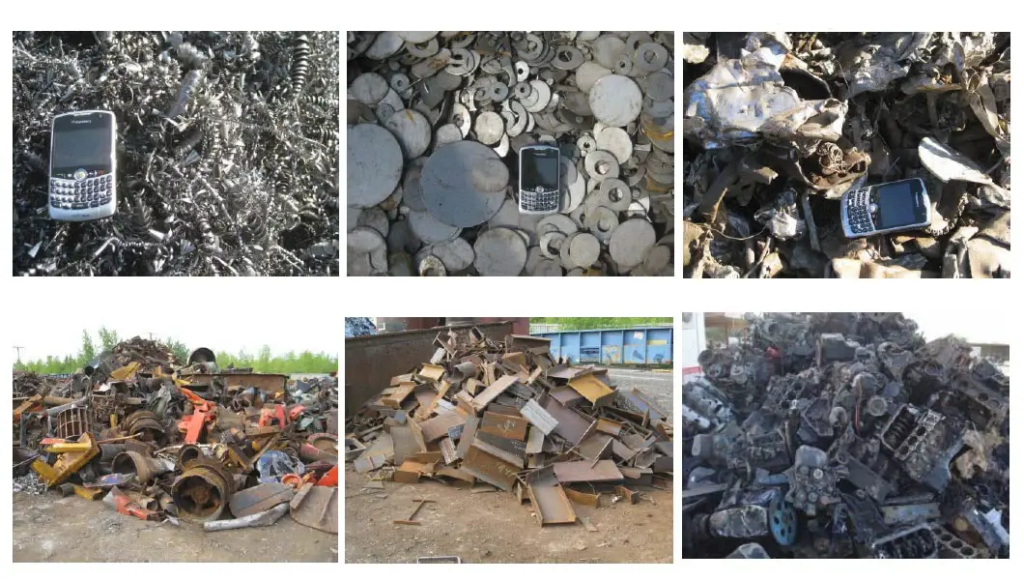
This represents the highest quality material, coming directly from manufacturing processes with known composition and minimal contamination.
- Examples: Sheet metal trimmings, punch-outs, turnings from machining operations
- Characteristics: Uniform composition, minimal oxidation, high density
- Processing: Minimal processing required, highest value per ton
Obsolete Scrap (Post-Consumer Scrap)
Materials that have completed their useful life in products and structures.
- Examples: Demolished buildings, end-of-life vehicles, discarded appliances, used packaging
- Characteristics: Mixed composition, often contaminated, requires significant processing
- Processing: Extensive sorting, cleaning, and preparation needed
The Specialty Categories
Within these broad classifications exist hundreds of specific grades recognized globally. For instance, copper alone has over 30 standard grades, from “Bare Bright” (99% pure) to “Light Copper” (mixed thin materials). Scrap and Metal
Chapter 2: The Science and Technology of Modern Metal Recycling
Collection and Transportation: The First Critical Step
The recycling journey begins long before material reaches our facility. Metals Recycling Ltd has developed sophisticated collection networks:
Strategic Partnerships
- Industrial Accounts: Long-term relationships with manufacturers generating consistent scrap streams
- Municipal Contracts: Collaboration with local governments for curbside and drop-off programs
- Commercial Collections: Service agreements with demolition contractors, auto dismantlers, and plumbing/electrical businesses
Advanced Logistics
Our fleet of specialized vehicles includes:
- Walking-floor trailers: For loose, lightweight materials
- Roll-off containers: For construction and demolition sites
- Flatbeds with magnets: For efficient ferrous metal collection
- GPS-tracked vehicles: Optimizing routes and reducing carbon footprint
Sorting Technologies: From Manual to AI-Powered Systems
Once materials arrive at our 12-acre facility, they enter one of the most technologically advanced sorting operations in the region.
Stage 1: Manual Pre-Sorting
Despite technological advances, human expertise remains invaluable. Our trained operators perform initial visual inspections, removing obvious contaminants and hazardous materials.
Stage 2: Mechanical Separation
- Magnetic Separation: Overhead and drum magnets efficiently remove ferrous materials from mixed streams
- Eddy Current Separators: Using alternating magnetic fields to repel non-ferrous metals from non-metallic materials
- Air Classification: Separating lightweight materials (plastics, paper) from heavier metals
Stage 3: Sensor-Based Sorting
- X-Ray Fluorescence (XRF) Analyzers: Handheld and conveyor-mounted units that identify metal composition in seconds
- Induction Sensors: Detecting specific metals based on their electrical conductivity
- Color and Shape Recognition: Advanced camera systems that sort by visual characteristics
Stage 4: AI-Enhanced Systems
Our latest investment includes artificial intelligence that learns from our sorting operations, continuously improving accuracy and efficiency. These systems can now identify metal types with over 98% accuracy at conveyor speeds exceeding 15 feet per second.
Size Reduction: Preparing Materials for Market
Different end markets require different material forms. Our size reduction processes include:
Shearing
Hydraulic shears capable of exerting 2,500 tons of force slice through massive steel beams, machinery, and heavy plate. Our primary shear processes approximately 500 tons of material daily.
Shredding
Automobile shredders represent some of the most powerful recycling equipment ever built. Our 10,000 horsepower shredder can reduce a car to fist-sized pieces in under 45 seconds, processing up to 300 vehicles per day.
Baling
For lighter materials like aluminum cans or sheet metal, we use baling presses that create dense, uniform blocks weighing up to 2,500 pounds. These bales stack efficiently for transportation and meet exact mill specifications.
Granulation
For extremely pure material streams like copper wire, we use granulators that chop materials into small, uniform pieces while separating insulation through air separation systems.
Chapter 3: The Environmental Imperative: Data-Driven Sustainability
Energy Savings: The Staggering Numbers
The energy conservation achieved through metal recycling represents one of humanity’s most effective environmental strategies.
Comparative Energy Requirements (per ton of metal produced):
- Aluminum: Recycled = 5-10 GJ vs. Primary = 200-250 GJ (95% savings)
- Copper: Recycled = 20-30 GJ vs. Primary = 100-120 GJ (75% savings)
- Steel: Recycled = 5-15 GJ vs. Primary = 20-30 GJ (60-75% savings)
To put this in perspective, the energy saved by recycling one aluminum can power a 100-watt light bulb for 20 hours or run a television for 3 hours. The annual energy savings from aluminum recycling in the United States alone could power 6 million homes for a full year.
Emission Reductions: Cleaning Our Air
Metal production represents approximately 8% of global carbon emissions. Recycling dramatically reduces this footprint:
Carbon Dioxide Reductions:
- Steel recycling: 58% reduction in CO₂ emissions
- Aluminum recycling: 92% reduction in CO₂ emissions
- Copper recycling: 65% reduction in CO₂ emissions
Metals Recycling Ltd’s operations directly prevent approximately 150,000 metric tons of CO₂ emissions annually—equivalent to removing 32,000 passenger vehicles from the road.
Resource Conservation: Preserving Our Planet’s Wealth
Mining Avoidance (Annual Impact of Our Operations):
- Iron Ore: 200,000 tons preserved
- Bauxite (Aluminum Ore): 85,000 tons preserved
- Copper Ore: 50,000 tons preserved
Water Conservation:
Metal mining and processing are extraordinarily water-intensive. Recycling reduces water usage by:
- Aluminum: 97% reduction
- Copper: 85% reduction
- Steel: 40% reduction
Our operations save approximately 500 million gallons of water annually—enough to supply 4,500 households for a year.
Landfill Diversion: The Space We Save
Before modern recycling, metal constituted approximately 8-10% of municipal solid waste. Today, metals are among the most recycled materials. Our facility alone diverts over 250,000 tons of material from landfills annually. If stacked in garbage trucks, this would form a line stretching from New York City to Washington D.C. Scrap and Metal
Chapter 4: The Economics of Scrap: Understanding Market Dynamics
Global Market Mechanisms
Scrap metal operates in a truly global marketplace. Prices in London Metal Exchange (LME) directly impact local scrap values worldwide.
Key Price Influencers:
- Primary Metal Prices: Scrap typically trades at a discount to newly mined metal
- Global Demand: Industrial production rates in China, the United States, and Europe
- Trade Policies: Tariffs, quotas, and international agreements
- Transportation Costs: Shipping container availability and fuel prices
- Currency Fluctuations: The U.S. dollar’s strength as the trading standard
The Domestic Supply Chain
At Metals Recycling Ltd, we navigate this complex market to ensure fair pricing for both suppliers and buyers:
Supplier Pricing Factors:
- Composition Purity: Exact alloy or metal type
- Contamination Level: Presence of non-metallics or hazardous materials
- Volume and Consistency: Larger, regular shipments command better rates
- Preparation: Properly sorted and cleaned materials receive premium pricing
- Market Timing: Strategic selling during price peaks
Buyer Advantages:
- Cost Savings: Typically 20-60% below virgin material prices
- Price Stability: Often less volatile than primary metal markets
- Local Availability: Reduced lead times and transportation costs
- Custom Processing: Materials prepared to exact specifications
Economic Impact: Beyond the Scale
Our operations generate significant economic benefits:
Direct Employment: Metals Recycling Ltd employs over 200 skilled workers in positions ranging from equipment operators to metallurgists and international traders.
Indirect Economic Impact: Each recycling job creates approximately 2-3 additional jobs in transportation, processing equipment manufacturing, and related services.
Municipal Savings: By reducing landfill requirements, we save local governments an estimated $50-75 per ton in avoided disposal costs.
Industrial Competitiveness: Local manufacturers using our recycled materials gain cost advantages in both domestic and international markets.
Chapter 5: Specialized Processing at Metals Recycling Ltd
Automotive Recycling: Beyond Just Scrap Cars
End-of-life vehicles represent one of our most complex and valuable material streams. A modern car contains over 30 different metals and alloys.
Our 12-Step Vehicle Processing Protocol:
- Depollution: Safe removal of fluids (oil, coolant, fuel), batteries, and tires
- Component Recovery: Salvageable parts for resale market
- Catalytic Converter Processing: Specialized extraction of platinum, palladium, and rhodium
- Airbag Neutralization: Safe deployment or removal
- Glass Removal: Separate processing for automotive glass
- Interior Stripping: Separation of fabrics, plastics, and foams
- Wire Harness Processing: Granulation and separation of copper from insulation
- Shredding: Reduction to fist-sized pieces
- Post-Shredder Technology: Advanced separation of remaining materials
- Metallurgical Analysis: Precise composition verification
- Batching: Creating optimized blends for different mill specifications
- Quality Certification: Documentation of composition and preparation
From a typical mid-sized vehicle, we recover approximately:
- 1,800 pounds of steel
- 400 pounds of aluminum
- 42 pounds of copper
- 24 pounds of zinc
- 1-2 grams of platinum group metals
Electronics Recycling: Urban Mining in Action
Electronic waste represents the fastest-growing waste stream globally, containing both valuable resources and hazardous materials requiring careful handling.
Our Certified E-Waste Processing:
- R2 (Responsible Recycling) Certified: Meeting the highest standards for environmental protection and data security
- Data Destruction: Department of Defense-level data wiping and physical destruction
- Component Recovery: Manual removal of circuit boards, processors, and memory
- Specialized Processing: Dedicated lines for monitors, printers, and servers
Recovery Rates from Common Electronics:
- Smartphones: 0.034g gold, 0.34g silver, 15g copper per device
- Laptops: 0.2-0.5g gold, 2-4g silver, 200-400g copper
- Desktop Computers: 0.5-1g gold, 5-10g silver, 500-1000g copper
Industrial Account Services: Custom Solutions
For manufacturing partners, we develop tailored programs:
Closed-Loop Systems: Direct return of manufacturing scrap to original production processes
Just-in-Time Collections: Aligning with production schedules to optimize floor space
Material Tracking: Detailed reporting on volumes, values, and environmental benefits
Process Optimization: Consultation on reducing scrap generation and improving segregation
Chapter 6: Safety, Compliance, and Community Responsibility
Safety First: Protecting Our Team and Community
The recycling industry presents unique safety challenges that we address through comprehensive programs:
Equipment Safety
- Regular Maintenance: Predictive maintenance using vibration analysis and thermography
- Operator Training: 200+ hours of initial training with quarterly refreshers
- Safety Systems: Laser curtains, emergency stops, and comprehensive guarding
Material Safety
- Hazardous Material Handling: Certified protocols for batteries, mercury-containing devices, and radioactive materials
- Dust Control: Baghouse filtration capturing 99.97% of particulate matter
- Noise Abatement: Acoustic enclosures reducing operational noise by 25-30 decibels
Our Safety Record:
- 40% below industry average for recordable incidents
- 500+ days since last lost-time accident
- Annual safety training investment exceeding $250,000
Regulatory Compliance: Exceeding Requirements
Metals Recycling Ltd maintains compliance with over 50 federal, state, and local regulations:
Environmental Compliance:
- Air Quality: Operating under strict Title V permits with continuous emissions monitoring
- Water Protection: Impermeable surfaces, runoff collection, and treatment systems
- Hazardous Waste: Proper handling, storage, and disposal documentation
Operational Compliance:
- OSHA Standards: Exceeding requirements in lockout/tagout, confined space, and material handling
- DOT Regulations: Commercial driver compliance and vehicle maintenance standards
- ISRI Specifications: Adherence to Institute of Scrap Recycling Industries quality standards
Community Engagement: Beyond Business
We recognize our role extends beyond processing materials:
Educational Programs:
- Facility Tours: Over 2,000 students annually learn about recycling science
- School Partnerships: STEM curriculum development and classroom presentations
- Scholarship Program: $50,000 annually for students pursuing environmental careers
Community Partnerships:
- Charity Drives: Annual metal collection events benefiting local organizations
- Job Training: Partnerships with vocational programs and re-entry initiatives
- Public Recycling Events: Free collection days for household materials
Transparency Initiatives:
- Annual Sustainability Report: Detailed metrics on environmental and social impact
- Open House Events: Regular community engagement opportunities
- Supplier Code of Conduct: Ethical standards for all business partners
Chapter 7: The Future of Metal Recycling
Technological Innovation on the Horizon
Advanced Sorting Technologies:
- Hyper-spectral Imaging: Identifying materials based on their full spectral signature
- Laser-Induced Breakdown Spectroscopy (LIBS): Instant elemental analysis for precise sorting
- Robotic Systems: AI-powered robots for complex disassembly tasks
Processing Innovations:
- Plasma Arc Technology: Higher temperature processing for difficult materials
- Biometallurgy: Using microorganisms to extract metals from low-grade sources
- Supercritical Fluid Extraction: Environmentally benign separation techniques
Blockchain Integration:
We’re piloting blockchain technology for:
- Material Traceability: Tracking metals from origin through recycling and back to production
- Carbon Credit Trading: Transparent accounting of emission reductions
- Automated Settlements: Smart contracts for instant payment upon material verification
The Circular Economy Vision
Metals Recycling Ltd is evolving from a recycling company to a circular economy enabler:
Product-as-a-Service Models: Exploring arrangements where we retain ownership of metals while manufacturers pay for their use
Design for Recycling Partnerships: Working upstream with product designers to optimize future recyclability
Industrial Symbiosis Networks: Creating connections where one company’s waste becomes another’s raw material
Global Trends Shaping Our Future
Urban Mining: As ore grades decline globally, cities become increasingly important metal sources. The concentration of gold in a ton of mobile phones is 100 times greater than in a ton of gold ore. Scrap and Metal
Critical Metals Recovery: Expanding capabilities for lithium, cobalt, and rare earth elements essential for green technologies
Decarbonization Synergies: As industries electrify, demand for copper, aluminum, and specialty metals will increase dramatically, with recycling supplying an ever-larger portion
Policy Developments: Extended producer responsibility laws and carbon pricing mechanisms creating new opportunities and responsibilities
Conclusion: Your Role in the Metal Ecosystem
The journey of metal is infinite—from ore to product, product to scrap, and scrap back to product again. At Metal Recycling Ltd, we’re honored to facilitate this perpetual cycle that sustains both industry and environment. Scrap and Metal
Every piece of metal recycled represents multiple victories:
- A victory for conservation, preserving natural resources for future generations
- A victory for energy efficiency, reducing consumption and emissions
- A victory for economic efficiency, creating value from what was once considered waste
- A victory for community, creating jobs and supporting local industry
Whether you’re an industrial partner with consistent scrap streams, a contractor managing demolition projects, or an individual cleaning out a garage, you play a crucial role in this system. The aluminum can you recycle today might become part of an electric vehicle tomorrow. The copper pipe from a renovation could become part of a wind turbine generating clean energy. Scrap and Metal
At Metals Recycling Ltd, we’re more than just a recycling facility. We’re a vital link in the global supply chain, a guardian of environmental resources, and a partner in building sustainable communities. With over three decades of experience, continuous technological investment, and unwavering commitment to responsible operations, we’re positioned to meet the recycling challenges and opportunities of the coming decades. Scrap and Metal
Join us in closing the loop. Whether you’re looking to sell scrap metal or purchase high-quality recycled materials for your operations, visit our website at metalsrecyclingltd.com or contact our team to discover how we can create value together while building a more sustainable future. Scrap and Metal
Metals Recycling Ltd: Transforming scrap into resource, today and tomorrow. Scrap and Metal
Scrap and Metal >> Scrap and Metal >> Scrap and Metal >> Scrap and Metal >> Scrap and Metal >> Scrap and Metal >> Scrap and Metal >> Scrap and Metal >> Scrap and Metal >> Scrap and Metal >> Scrap and Metal >> Scrap and Metal >> Scrap and Metal >> Scrap and Metal >> Scrap and Metal >> Scrap and Metal >> Scrap and Metal >> Scrap and Metal >> Scrap and Metal >> Scrap and Metal >> Scrap and Metal
